
01 April 2026
For years, the default measure of L&D success was a familiar one: completion rates. Did your people finish the course? Did they pass the assessment? Tick the box. Move on. But in 2026, that model is finally — and irreversibly — breaking down. Organisations across industries are waking up to a harder truth: completing a course and actually developing a skill are two very different things. The shift to skills-based learning isn’t just a trend. It’s a fundamental rethinking of what workplace learning is for.
Course completion has always been a proxy metric — a stand-in for something we actually care about but struggle to measure. The problem is that proxies have a way of becoming the goal. When HR and L&D teams are measured on enrolments and completions, that’s what gets optimised for. Content gets shorter to improve finish rates. Assessments get easier to reduce drop-offs. And somewhere along the way, the actual purpose — equipping people to do their jobs better — gets lost.
Recent research confirms what many practitioners already suspected: organisations that prioritise skill acquisition over completion metrics report significantly higher performance improvement and stronger return on L&D investment. The gap between training activity and business impact isn’t a mystery — it’s a direct consequence of measuring the wrong things.

Shifting to a skills-first model requires more than rebranding your training catalogue. It demands a different starting point. Instead of “what content should we deliver?”, the question becomes “what capabilities does this role actually require, and how do we know when someone has developed them?” That shift sounds simple. The implications are profound.
It means development goals need to be specific and role-relevant — not generic competency frameworks that apply to everyone and no-one. It means learning needs to connect directly to the work people are doing, not sit alongside it as a separate activity. And it means measurement needs to move beyond completion to track actual capability change over time.
This is the principle behind KnowHow’s Training Goals feature. Rather than assigning learning and hoping it sticks, Training Goals are shaped through a conversation between employee and manager — grounded in real role requirements, agreed on together, and tied to meaningful performance outcomes. It’s not automated target-setting. It’s structured, intentional development.

One of the genuine breakthroughs of 2026 is AI’s ability to make skills-based content creation feasible at scale. The historical barrier was simple: creating tailored, role-specific learning content took too long and cost too much. Generic content was the pragmatic compromise. AI removes that constraint.
KnowHow’s AI-Powered Course Creation Tools allow L&D professionals to rapidly build quality, outcome-aligned courses and assessments — including automatically generating quizzes from existing content using the AI Quiz Generator. The result is content that’s specific enough to be genuinely useful, created quickly enough to stay relevant, and structured around the skills that actually matter for performance.
Skills-based learning only earns its place at the strategic table when it can demonstrate impact in language leadership understands. That means moving beyond completion dashboards to metrics that show capability change, performance improvement, and business outcomes.
KnowHow’s Insightful Analytics are built for exactly this purpose. L&D leaders can track skill progression across teams, identify where development is stalling, and present leadership with clear evidence of how learning investment is translating into workforce capability. It’s the difference between reporting on activity and demonstrating genuine organisational impact.
The organisations winning at L&D in 2026 aren’t those with the most content or the highest completion rates. They’re the ones who’ve made the harder shift: defining what capability looks like, building learning that develops it, and measuring whether it’s actually happening. That’s the work. And the right platform makes it possible. Explore how KnowHow supports skills-based development across your organisation.
25 March 2026
If your L&D strategy is still built around course completion rates and annual training calendars, 2026 has a message for you: that model is running out of runway. Across the globe, HR and L&D leaders are converging on a new approach — one that connects learning directly to skills, performance, and measurable business outcomes. It’s not a trend anymore. It’s the baseline expectation.
This shift is being driven by two forces colliding at speed: the rapid evolution of skills required in an AI-augmented workplace, and mounting pressure on L&D teams to prove return on investment. The organisations that are pulling ahead aren’t those with the most content — they’re the ones who’ve made learning inseparable from performance.
A recent Training Industry report confirmed what many L&D professionals already feel: there’s a persistent gap between training delivery and real-world skill application. Employees complete courses. Managers tick boxes. But when it comes to actual performance improvement, the needle barely moves. The culprit isn’t the people — it’s the model. Training designed around content consumption rather than skill development will always struggle to demonstrate impact.
Skills-based learning flips the equation. Instead of starting with “what content should we create?”, it starts with “what capabilities does this role actually require, and how do we develop and measure them?” It’s a subtle shift in framing, but the downstream effects on design, delivery, and measurement are profound.

One of the most common failure points in skills-based L&D is the absence of a clear, shared understanding between managers and employees about what “growth” actually means for a given role. Without that alignment, development becomes a guessing game — employees pursue content that interests them, managers hope it translates to performance, and L&D has no way of knowing if any of it is working.
KnowHow addresses this through Training Goals — a feature built around the principle that meaningful development starts with a conversation. Managers and employees work together to define specific, role-relevant growth objectives. Those goals become the anchor for learning activity, performance check-ins, and progress measurement. It’s not automated target-setting. It’s structured intentionality — supported by a platform that makes it easy to follow through.
Skills-based L&D only earns its seat at the strategic table when it can speak the language of business outcomes. That means moving beyond completion reports and into territory that answers questions like: which teams are building capability fastest? Where are the persistent skill gaps? What’s the correlation between learning engagement and performance scores?
KnowHow’s Insightful Analytics are designed to surface exactly this kind of intelligence. L&D leaders can track skill progression, identify where development is stalling, and present leadership with evidence-based narratives about how learning investment is translating to workforce capability. It transforms the L&D function from a cost centre into a strategic asset.

One of the most significant enablers of skills-based learning in 2026 is AI — specifically, its ability to dramatically accelerate content creation without compromising quality. Industry research shows that 85% of business leaders expect a surge in skills development needs over the next two years. L&D teams simply cannot create content fast enough using traditional methods to meet that demand.
KnowHow’s AI-Powered Course Creation Tools are designed to address this pressure directly. L&D professionals can rapidly create quality, outcome-aligned courses and assessments — including using the AI Quiz Generator to automatically create quizzes from course content. This isn’t about replacing instructional design expertise. It’s about augmenting it: freeing up your team’s time and energy to focus on the strategic, human-centred work that AI can’t do.
The ultimate goal of skills-based L&D isn’t a better training catalogue — it’s an organisation where learning is woven into the culture. Where people expect to grow, managers expect to develop their teams, and leadership invests in capability as a competitive advantage. That’s not an accident. It’s built through consistent processes, meaningful conversations, and platforms that make it easy to do the right thing.
KnowHow has been helping organisations build this kind of culture since 1999 — with an all-in-one LMS that integrates learning, performance, and skills development into a single, coherent experience. It’s not a generic training repository. It’s a platform built to transform training into business impact.
If you’re ready to move beyond course completion and start building a workforce that genuinely grows — explore what KnowHow can do for your organisation. The shift to skills-based learning starts with one conversation. Let’s have it.
18 March 2026
The conversation in HR and L&D has shifted — and it’s shifted fast. Gone are the days when a completed course certificate was evidence enough of capability. In 2026, the question organisations are asking isn’t “did they finish the training?” — it’s “can they actually do the job?” That’s the essence of skills-based learning, and it’s reshaping how forward-thinking companies build, develop, and retain their people.
With AI accelerating the pace of change in virtually every industry, and global skills shortages showing no sign of easing, L&D professionals are under pressure to move beyond compliance tick-boxes and generic learning libraries. The organisations winning the talent battle are the ones connecting learning directly to real performance outcomes — and backing it up with data.

Several forces are converging at once. AI is disrupting job roles faster than traditional training can respond. Talent shortages mean organisations can’t afford to overlook capable people simply because they lack a specific qualification. And boards are demanding measurable ROI from L&D investment — “we ran a course” no longer cuts it as evidence of success.
According to recent research, the most competitive organisations in 2026 are those that have embedded skills into the core of their workforce strategy — not just into their training calendar. Skills inform how they hire, how they develop people, how they plan for future roles, and how they measure whether investment is working.
Skills-based learning isn’t a platform or a product — it’s an approach. It starts with identifying the specific capabilities that matter for each role, then building learning experiences designed to develop and measure those capabilities directly.
In practical terms, this means:
This is where the right platform makes a significant difference. KnowHow’s Training Goals feature is built around exactly this principle — development goals are shaped through meaningful conversations between employees and their managers, ensuring alignment with both individual growth and real business priorities. The focus is always on skills and outcomes, not just activity.

One of the biggest frustrations for L&D leaders is the inability to demonstrate impact. You know learning is happening. You suspect performance is improving. But when the CFO asks for evidence, the best you can offer is a spreadsheet of course completions.
Skills-based learning changes that equation. When learning is tied to specific competencies, and those competencies are tied to performance data, the evidence becomes visible. You can show which skills have improved, which teams are growing, and where gaps still exist.
KnowHow’s Insightful Analytics are designed for exactly this — turning learning data into actionable insights that help HR and L&D leaders make confident decisions and demonstrate the genuine business value of their work.
The good news is that moving toward a skills-based approach doesn’t require a complete overhaul of your L&D function. Start with one team or one role. Identify the three or four competencies that genuinely matter for performance in that role. Build or curate learning that develops those specific capabilities. Assess application, not just completion. Review progress in performance conversations.
That’s a skills-based learning programme. It’s not complicated — but it does require intentionality, and the right tools to support it.
The organisations that make this shift in 2026 won’t just see better training outcomes. They’ll see better business outcomes — and they’ll be able to prove it. Explore how KnowHow supports skills-based development →
Corporate training has a dirty secret: most of it doesn’t stick. Employees sit through a course, complete the assessment, and return to their desks — where 70% of what they just learned evaporates within a week. In 2026, forward-thinking organisations are finally addressing this with a deceptively simple idea: stop pulling people out of their work to learn, and start bringing the learning to the work.
This is the principle behind one of the most significant shifts in L&D this year — and it’s changing what organisations expect from their learning platforms.
The concept, popularised by industry analyst Josh Bersin, is straightforward: learning is most effective when it happens at the moment of need, in the context of actual work. Instead of scheduling a training day three months before a skill is needed, employees access bite-sized, relevant content right inside the tools they already use — their CRM, project management dashboard, or communication platform.
Think of it as the difference between studying a map before a road trip and having GPS navigation as you drive. The information is the same; the timing and context make all the difference.
In 2026, AI is making this genuinely scalable. Intelligent LMS platforms can now detect where an employee is in their workflow, anticipate what knowledge they might need, and surface the right resource at precisely the right moment — without them having to go looking for it.

The numbers are hard to ignore. According to recent research from the Association for Talent Development, organisations that rely primarily on scheduled, event-based training report significantly lower knowledge retention and application rates compared to those using continuous, embedded learning approaches.
The reasons are structural:
The result is completion metrics that look good on a dashboard but tell you very little about whether behaviour has actually changed.
The organisations getting this right in 2026 share a few common practices:
They’ve integrated learning into performance management. Rather than treating training as a separate HR function, they connect learning directly to individual objectives and development reviews. When a manager identifies a capability gap in a performance conversation, a targeted learning path is triggered automatically — not scheduled for next quarter.
They use microlearning strategically, not as a shortcut. Short-form content isn’t just about attention spans. Done well, microlearning modules are designed around specific decisions or tasks employees face regularly. A two-minute video on handling a difficult client conversation is far more valuable than a 90-minute customer service course — if it appears the morning before that conversation happens.
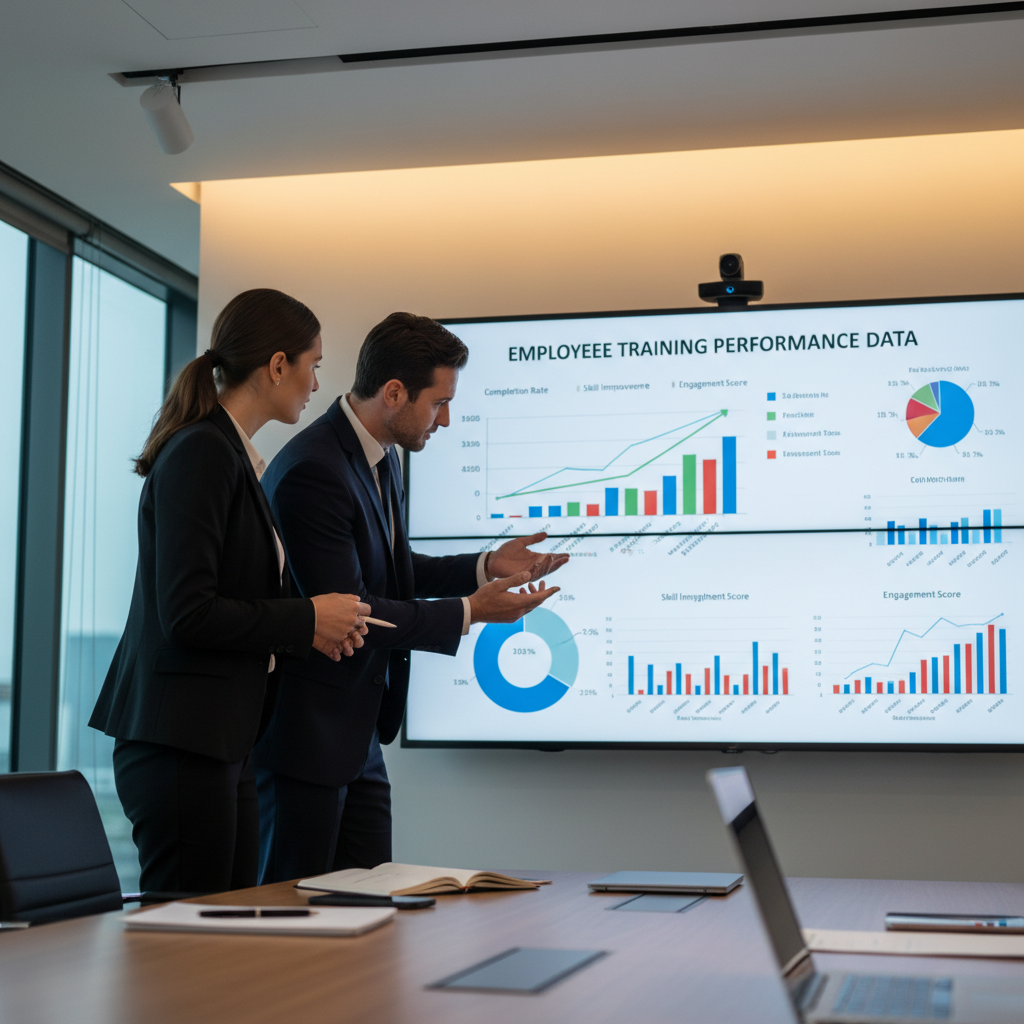
They measure application, not just completion. The shift from tracking course completions to measuring on-the-job behaviour change is the hallmark of a mature L&D function. Modern platforms make this possible by linking learning activity to performance data, giving HR and line managers visibility into whether training is actually moving the needle.
The barrier to in-the-flow learning has always been personalisation — how do you deliver the right content to the right person at the right moment across an organisation of hundreds or thousands of people?
KnowHow removes that barrier. By connecting learning directly to performance data, KnowHow builds personalised learning paths that evolve as each employee grows. Training Goals are shaped through meaningful conversations between employees and their managers, ensuring alignment with both individual growth and organisational priorities. Insightful Analytics then give managers a real-time view of team skill development — so gaps are spotted before they become problems. And with AI-Powered Course Creation tools, L&D teams can rapidly build and deploy relevant content without the usual time and resource drain. The result is a platform that doesn’t just store learning — it actively drives it.
If your L&D strategy still revolves primarily around scheduled courses and annual compliance training, 2026 is the year to reassess. Not because those approaches have no value — they do — but because they’re increasingly insufficient on their own.
The organisations winning the talent battle right now are those that have made learning a continuous, contextual, and deeply personal experience. Their employees don’t think of training as something that happens to them. They think of it as something that helps them do their jobs better, right now.
That’s the shift. And the technology to make it happen is already here.
KnowHow is built to bring learning into the flow of work — connecting performance management, personalised learning paths, and real-time analytics in one platform.
We are thrilled to share some big news from our team here at KnowHow. We’ve recently launched a set of AI eLearning tools to make it much easier to build courses and deliver content effectively. Here’s a quick run-through of what these new tools can do and how they can help you in your role.
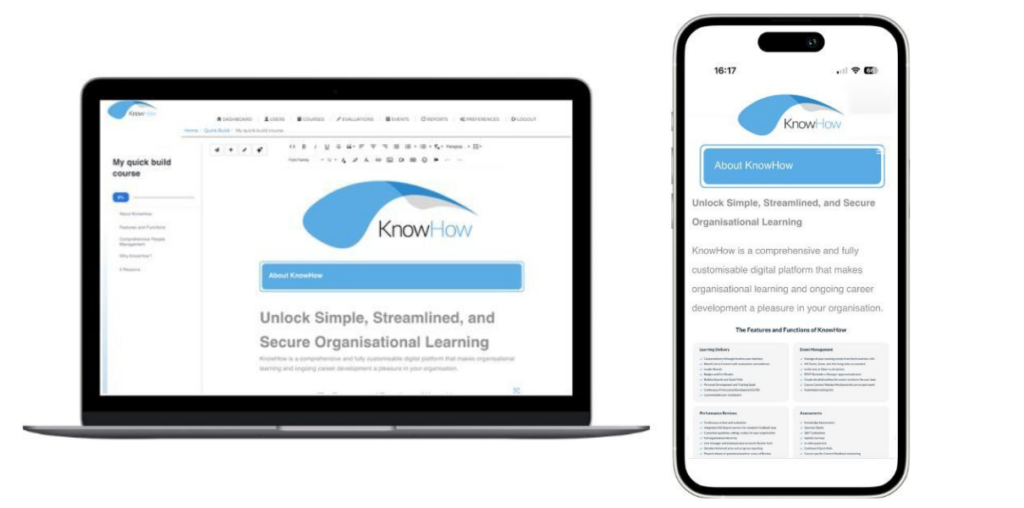
For those who are really short on time, our AI Course Generator will be a lifesaver. Just tell it what you need your team to learn, and it will put together a course for you. You can review and tweak it in Quick Builder before it goes live to make sure everything is just right.
The AI Quiz Generator is a tool we think managers will find really useful. It takes the content you’ve uploaded and automatically designs quizzes for it. This means you don’t have to spend time coming up with questions and answers yourself. It’s a great way to make sure learners understand the material without extra work on your part.
Our new Quick Builder tool is designed to help you create courses quickly without sacrificing quality. If you have existing material in PDFs or Word documents, you can easily make use of Quick Builder. Add some style to your courses using the HTML editor, making sure they match your organisation’s look. Possibly the most exciting new offering is our new AI Quiz Generator—it automatically creates quizzes from your course content, saving you time and effort!
We’ve made sure that these new AI tools work smoothly with the existing features on our platform. You can switch between using traditional methods and the new AI options whenever you want, all within the same system. We’re committed to keeping up with the latest technology so that we can keep improving the platform for you.
By introducing these AI tools, we aim to make your job easier. Creating courses and assessing learners can now be done much faster, which means you can focus more on engaging with learners and less on administrative tasks. These tools are here to help you provide better training and make sure everyone can keep learning effectively.
Thanks for your continued support as we strive to make KnowHow the best learning platform it can be. We believe these tools are a big step forward in making learning and training as straightforward and effective as possible.
Looking forward to seeing all the great ways you’ll use these new features!
Employee onboarding can be complex and challenging but it is critical to shaping a new hire’s journey. It’s often plagued with issues such as information overload, waning interest, and the elusive measurement of onboarding success. Let’s dissect these common hurdles and uncover how KnowHow’s Learning Management Solutions (LMS) can help create a more effective, engaging, and streamlined onboarding experience for newcomers.
One common problem in many onboarding programs is overwhelming new hires with too much information all at once. This can leave them feeling confused and disconnected, rather than giving them a clear grasp of their new role. KnowHow’s Learning Management System (LMS) cleverly avoids this by breaking down information into small, manageable pieces. This approach doesn’t just make learning easier to swallow; it also greatly improves how well new hires remember and understand important information.
Effective learning is all about keeping people engaged. Traditional onboarding methods usually rely on long presentations and thick manuals, which can quickly bore new hires. On the other hand, KnowHow’s Learning Management System (LMS) makes learning exciting with interactive quizzes, real-life scenarios, and inline video pop-up questions. This interactive approach not only grabs the attention of new employees but also helps them feel more connected to the company’s culture and values right from the start.

Measuring the success of the onboarding process can be tough for many organisations. How do you know if new employees are really understanding and absorbing the information they’re given? KnowHow’s Learning Management System (LMS) comes with advanced analytics and reporting tools that let organisations track progress, assess learning outcomes, and identify areas for improvement. This smart, data-driven approach guarantees ongoing improvement, making the onboarding process better with each new group of employees.

Every organisation has its own special vibe, and this should be reflected in its onboarding process. KnowHow’s Learning Management System (LMS) offers lots of customisation options, letting you shape the onboarding experience to match your company’s specific culture, values, and way of doing things. This personalised approach means that new hires aren’t just learning about their job roles; they’re getting a feel for the unique spirit and ethos of your organisation.
In short, a well-planned onboarding process sets the stage for a rewarding relationship between employees and the organisation. KnowHow’s Learning Management Solutions provide a modern, interactive, and data-driven way to tackle the usual onboarding challenges. Choosing KnowHow means more than just improving the onboarding experience; it’s a commitment to supporting your employees’ future and, as a result, the future of your organisation. Embrace this transformative journey and let KnowHow guide you towards a more efficient, engaging, and successful employee onboarding chapter.
While much that happens in the business world is unpredictable, our KnowHow team has a clear view of key e-learning trends for 2024. And being just around the corner now is a good time to lay the groundwork for future e-learning success.
This blog post primes you for your journey ahead. In fact, the term comes from the education practice of providing learners with a taste of future curriculum content that prepares them for the harder stuff that follows. Thankfully, with KnowHow’s LMS solutions, we’ve made e-learning easy, leaving you free to focus on your business operations while your employees enjoy learning new skills and knowledge.
One of the ways we support our clients is by sharing LMS insights on innovations and other practical wisdom in the form of LinkedIn posts. And in January, we kick off with a series of posts detailing our service offerings, how they work and specifically, how our corporate clients benefit.
Read on for your January primer!
Rapid technological evolution and shifting market demands have created the need for digital literacy and agile thinking. This trend will only grow in 2024, and players in the learning management systems space need to stay innovative, whether client-side or as an LMS provider. KnowHow leads because we understand what it means to be a corporate in a dynamic market and to help our clients increase digital literacy and become more agile, we merge state-of-the-art technology with the best expertise to create dynamic learning management systems.
What’s really at stake is that our platforms are more than information repositories; they enable user interactivity and engagement, leaving staff feeling inspired to learn.
We are forward thinkers and thrive in creating agile solutions suited to fast-paced corporate environments, meaning our clients can operate strategically. By closely monitoring industry trends and forecasts, KnowHow ensures its content and methodologies are always ahead of the curve. This proactive approach to lifelong learning equips employees with the skills needed for the present and prepares them for the challenges of tomorrow. Additionally, KnowHow’s LMS emphasises the importance of personal growth, making it a tool for holistic professional development.

The employee-centric learning experiences crafted by KnowHow are at the heart of its service offerings. These experiences are tailored to individual learning styles and professional goals, ensuring that each course, module, or training session is as practical as it is engaging. By aligning its LMS with its users’ career trajectories and aspirations, KnowHow not only enhances skill sets but also boosts employee morale and job satisfaction. Customising the LMS to fit specific business needs and learner preferences represents a significant advantage, making KnowHow an invaluable partner in the journey towards corporate excellence.
KnowHow’s commitment to providing tailor-made LMS solutions is the cornerstone of its success. We integrate data-driven learning with sophisticated HR information systems giving you a holistic approach to e-learning that transcends traditional learning boundaries. This method is crucial for addressing employees’ immediate learning needs whilst also anticipating future trends and challenges. The continuous process of innovation and adaptation at KnowHow ensures that each LMS solution is a specific product designed for maximum output.
There’s a world of information and insights we can share, and the above topics scratch the surface. Make sure you stay informed and up to date with your e-learning journey by visiting our LinkedIn page. Check out our previous posts and we’ll see you again in 2024!
In today’s competitive business landscape, companies continuously seek innovative solutions to increase productivity, enhance employee engagement, and optimise organisational processes. One advancement that has gained traction is Learning Management Systems (LMS). KnowHow, a knowledgeable leader in this field, offers seamless integration between LMS platforms and other software systems such as HR platforms, CRM tools, and e-commerce solutions. Explore the benefits of LMS integration and how it can propel your business forward in this blog.
Effective management of employee training and development is crucial for success. KnowHow’s LMS integrates with popular HR platforms like SAP SuccessFactors and Workday. This integration allows HR teams to track learning progress, analyse performance metrics, and identify skills gaps through a unified dashboard. Personalised training plans, streamlined compliance, and automated employee onboarding become a reality, resulting in improved talent management and reduced administrative effort as an e Learning solutions providers
Aligning training and customer relationship management is essential for delivering exceptional customer experiences. KnowHow’s LMS seamlessly integrates with CRM tools such as Salesforce or HubSpot. By training sales and customer service teams on product knowledge, customer communication, and sales techniques, businesses can achieve a unified customer experience. Detailed reporting and performance tracking help identify learning gaps, provide personalised coaching, and enhance customer satisfaction, all within the CRM workflow.

Expand your Cloud Based Learning offerings and generate additional revenue streams through LMS integration with e-commerce solutions like Shopify or Magento. KnowHow’s LMS empowers businesses to create e-learning courses, deliver certifications, and securely offer product training videos. Companies can enhance customer satisfaction and loyalty while capitalising on monetisation opportunities by ensuring customers, partners, and suppliers can access valuable knowledge assets.
Unlock operational excellence and gain a competitive advantage in your industry by integrating KnowHow’s LMS with other software tools. Integrating LMS with HR platforms, CRM tools, and e-commerce solutions streamlines operations, improves employee training, enhances customer service, and drives revenue growth. Embrace the expertise of KnowHow as a knowledgeable leader in LMS integration to stay ahead of the curve in this digital age!!. Explore the solutions KnowHow offers today and propel your organisation towards success with its cutting-edge LMS integration capabilities.
When the pandemic hit, managers worldwide had to quickly adapt to remote work solutions to keep their businesses running. The emergence of new technologies like Zoom opened up opportunities for companies to stay productive amidst the crisis.

The shift to cloud-based business operations also increased the demand for efficient, customised, and scalable E Learning Solutions Providers
With a 20-year track record of providing stable, secure, and efficient learning solutions, KnowHow has established itself as a leader in the field. This is how KnowHow offers an optimal solution for scaling up cloud-based learning and how clients can ensure the safety and effectiveness of their employees’ learning experience.
Knowledgeable managers are more likely to make sound decisions in the corporate world. Understanding the technical aspects of KnowHow’s services empowers managers to make informed choices regarding their organisation’s learning strategy. Let’s delve into these technical aspects and how they enhance the learning experience.
KnowHow’s cloud-based platform provides flexibility to corporate workforces, allowing them to access training materials simultaneously from anywhere. By utilising KnowHow, organisations can effortlessly scale up their learning initiatives without compromising quality or security.
While cloud-based learning brings great benefits, it also raises concerns about data security. KnowHow prioritises the protection of valuable corporate information and employs robust security measures. These measures include encrypted connections, strict access controls, and regular system maintenance to prevent unauthorised access and data breaches.
Clients can take specific steps to enhance the safety of their employees’ learning experience. Implementing strong password protocols and multi-factor authentication adds an extra layer of security. Regular data backup ensures that valuable training resources are never lost. Additionally, managing user permissions and access controls carefully helps limit exposure to sensitive information.
To fully maximise the opportunities provided by KnowHow’s cloud-based learning solutions, clients should actively engage with the platform. Encouraging regular feedback from employees and conducting periodic evaluations allows for continuous improvement of the learning experience. Monitoring usage patterns and analytics enables managers to identify knowledge gaps and areas that require further development.
Scaling up and ensuring the safety of cloud-based learning is paramount to empowering employees through knowledge. KnowHow’s 20-year track record and technical expertise in delivering stable, secure, efficient, and customised learning solutions make it an ideal choice.
By implementing best practices and actively engaging with the platform, managers can harness the power of cloud-based learning to equip their workforce with essential skills and drive organisational success. KnowHow closely collaborates with clients and partners, providing confidence in achieving their training goals while ensuring their employees’ learning experience is safe, efficient, and effective.