

25 May 2026
There’s a moment in almost every skills-based L&D conversation when the room goes quiet. The taxonomy is in. The library has been re-tagged. The managers are having better development conversations than they were a year ago. The dashboards are starting to tell a real story. And then someone leans forward and asks the harder question: so when is any of this actually going to change what people can do? That’s the question 2026 is finally forcing L&D teams to answer head-on.
The honest answer is that most of the work we’ve done so far — the strategy, the platforms, the content rebuild — has been about getting the inputs right. But capability doesn’t come from inputs. It comes from what people actually do between courses, in real work, with feedback loops short enough to matter. The missing half of skills-based L&D isn’t another piece of the architecture. It’s the practice and application layer that turns exposure into ability. And almost everyone is still under-investing in it.
Why Exposure Isn’t Capability
The instinct, for a long time, was to assume that good content plus a willing learner equals capability. Sit through a module on giving feedback, watch the scenarios, take the quiz, and the skill is yours. We now know that’s mostly not how skill formation works. Exposure to an idea is the first step in a longer process — not the process itself. Without retrieval, application, and correction, the content fades within days, and almost nothing about what the person can do at work actually changes.
In a skills-based model, that gap becomes uncomfortably visible. The taxonomy says we want someone at “intermediate” on a specific skill. The library says they’ve completed the intermediate content. The dashboard says “complete”. But the work they produce hasn’t moved. The honest reading is that we measured the wrong thing: we measured exposure when we needed to measure practice. The skills profile is only as real as the work behind it.

What “Practice” Actually Looks Like at Work
Practice, in an organisational sense, isn’t a separate event — it’s a structured use of the skill on real work, with someone close enough to the outcome to give honest feedback. That can be a scenario-based exercise inside the platform, but more often it’s smaller and messier than that: a junior writes a first-draft brief with the framework, a senior marks it up against the same criteria the course used, and the conversation that follows is where the skill actually starts to land.
The teams getting this right share a pattern. They name the practice opportunity at the same time they assign the content — “between now and our next one-on-one, you’re going to lead the first ten minutes of the team meeting using this technique” — rather than leaving it to chance. They tie it back to an explicit development goal, captured somewhere both the employee and the manager can see, so it doesn’t fall through the cracks. Tools like training goals and evaluations and feedback stop being admin features and start being the structure that holds practice in place.
Practice Lives in the Work, Not Next to It
One of the quieter shifts in 2026 is that L&D teams have stopped trying to build a parallel practice environment alongside the real one. The simulations and sandboxes still have a place — especially for high-stakes skills where mistakes are expensive — but for most capabilities, the best practice surface is the work itself. The next real customer email. The next forecasting cycle. The next difficult conversation. The job of L&D is to make that practice deliberate rather than accidental.
That “deliberate” piece is what changes the outcome. Random repetition reinforces whatever the person was already doing. Deliberate practice is narrower, harder, and structured around a specific gap. It targets the part of the skill the person is currently weakest at, runs through it under realistic conditions, and ends with feedback specific enough to act on. Done five times across two weeks, that loop moves capability further than a full day of content ever will.
The Manager’s Role: Smaller Than You Think, Bigger Than You Realise
The honest answer about managers and practice is that we keep asking them to do the wrong thing. We don’t need managers to become coaches in the formal, certified sense; most don’t have the time, and quite a lot don’t have the inclination. What we do need is something much smaller and much more consistent: a manager who is willing to spend five minutes at the start of a task naming what good looks like, and five minutes at the end of it pointing at what was strong and what to tighten next time. That’s the practice loop, and it doesn’t require a coaching qualification.
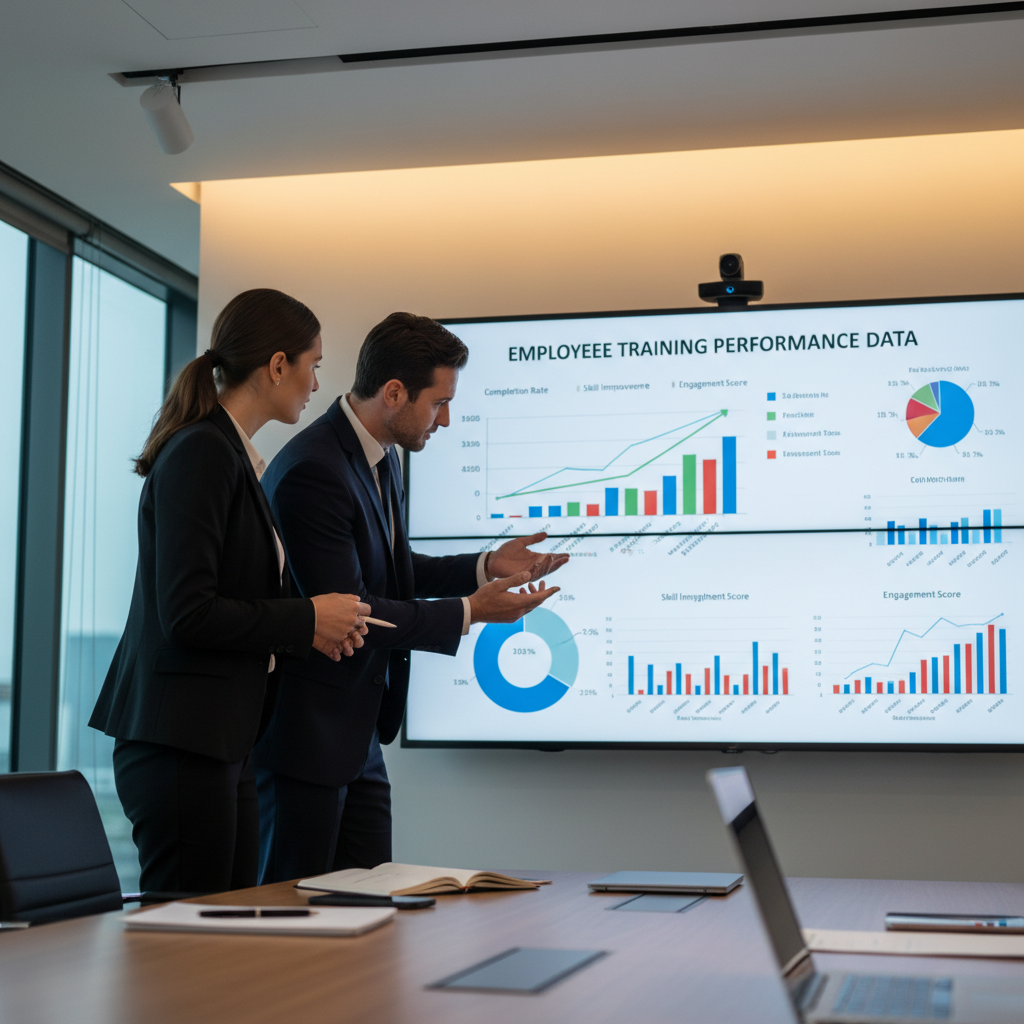
Where this gets formalised — in performance and development reviews and ongoing capability conversations — the manager’s job is to surface the patterns the day-to-day feedback doesn’t. Which skills are moving? Which ones aren’t? Where is the person ready to be stretched into the next level, and where do they still need protected practice time? Done well, the review stops being an annual artefact and starts being the place where the practice loop gets recalibrated.
Closing the Loop: How Practice Feeds the Skills Profile
The last piece, and the one that makes the whole thing pay back, is feeding practice signals back into the skills profile. Right now, most skills profiles are populated by content completions and self-assessments — both of which are weak proxies for real capability. The teams furthest ahead are starting to add signals from actual work: peer feedback on a deliverable, a manager’s rating against a known rubric, evidence of a skill applied to a stretch project, completion of a deliberate practice cycle. None of those signals is perfect on its own; together, they paint a much more honest picture than “course complete” ever did.
When those signals start to flow, the rest of the architecture finally clicks into place. The library knows which content actually moved capability and which only got watched. Internal mobility decisions are based on demonstrated practice, not on who happens to be visible. Analytics and reporting stop telling leaders how busy L&D has been and start telling them where the workforce is genuinely getting better. The skills-based programme stops being something the L&D team owns alone and starts behaving like a shared system of record for capability.
There’s nothing glamorous about the practice layer. It doesn’t come with a vendor demo or a category-defining keynote. It’s a quieter discipline — naming the practice opportunity, running the loop, capturing the signal, recalibrating — week after week. But it’s the half of skills-based L&D where the strategy stops being a slide and starts being something you can see in the work. In 2026, that’s the half worth investing in.