

Last time, this series took the talent map into the budget meeting and argued that it should arrive as an exposure, a bounded proposal, an honest comparison of the alternatives, and a date on which the next cycle would say whether it worked. If that argument landed, something has now been funded. A specific skill gap has a goal attached, a named group of people is working towards it, and finance has written a number down on the strength of a promise. That is a good outcome, and it creates an obligation most L&D teams are not used to carrying.
The obligation is the report back. Somewhere on the calendar there is a meeting where someone will ask what the money bought. How that conversation goes decides whether the evidence-led case becomes the normal way L&D is funded, or a one-off that worked once and was never trusted again. This post is about preparing for it, which in practice means preparing for it on the day the money arrives, not the week before the review.
The Promise Was a Prediction. Treat It Like One.
A budget case built on skills evidence is, underneath, a forecast: if we invest this much in this group, this capability will move by roughly this amount by this date. Forecasts can be right, wrong, or right for the wrong reasons, and the report back has to be able to tell the difference. That is only possible if the original claim was written down precisely enough to be checked. “Strengthen data capability in the operations team” cannot fail, which also means it cannot succeed in any way finance will believe.
The fix is unglamorous. Before the first session runs, record the baseline the case relied on, the people in scope, the skill definitions being used, the evidence standard a rating needs to meet, and the threshold that would count as success. Set those as named, dated training goals rather than as intentions in a slide deck. It takes an afternoon, and it is the difference between reporting a result and narrating an effort.

Report the Movement, Not the Activity
The temptation at review time is to fall back on the familiar evidence: attendance, completions, hours, satisfaction. All of it will be available and none of it answers the question. Finance funded a change in capability, so the report has to lead with capability. How many people in scope moved up a level on the targeted skill, on evidence that would survive the same calibration as the baseline? How did that compare with the forecast? Has the single-person dependency that opened the original case gained a second name?
This is where the earlier work on honest ratings and like-for-like comparison pays off. If the second cycle is assessed against the same framework, with the same evidence rules and similar raters, the change in the skills reporting is a finding. If the definitions drifted or the raters changed, it is a coincidence with a chart attached, and a sharp finance director will notice. Activity still has a place, lower down, as the explanation of how the movement happened. It just cannot be the headline.
When the Number Comes Back Smaller
Some funded goals will under-deliver, and the report back is where L&D either earns or loses credibility for good. The instinct is to soften the result, widen the definition of success, or bury the shortfall under positive feedback. Each of those trades a small embarrassment now for a much larger trust problem later, because the next case will be read in the light of how this one was reported.
A shortfall reported plainly, with a reason, is more useful to everyone than a success nobody quite believes. Perhaps the skill moved for people whose managers made time for practice and stalled where they did not, a pattern the development review conversations will usually reveal. Perhaps the original estimate was optimistic about how fast anyone can build judgement in a complex area. Either finding improves the next forecast, and saying so out loud signals that L&D is managing an investment rather than defending a budget line.
What the Report Back Should Contain
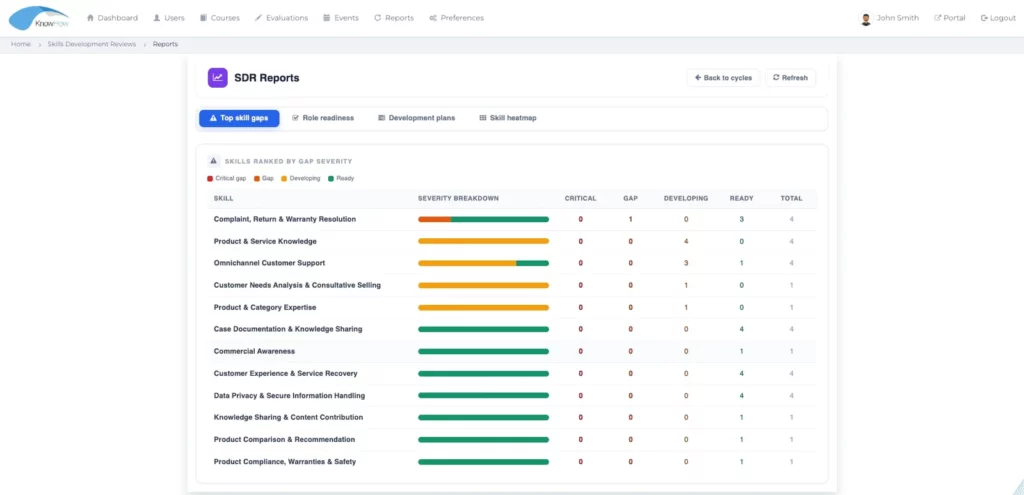
The document itself can be short, and should be. One page that restates the original claim and its date, shows the baseline beside the current position for the people in scope, and states plainly whether the threshold was met. A paragraph that explains the result, drawing on manager input and learner evaluations and feedback for the why rather than the what. A short note on cost against plan. Then a recommendation, which is the part most reports forget: continue, extend, adjust, or stop.
That last option matters more than it looks. An L&D function willing to recommend stopping something that did not work is one finance can afford to trust with the next request. It turns the relationship from an annual negotiation into something closer to portfolio management, where each skills investment is a position that is reviewed on its merits and either reinforced or closed.
The Second Case Is Written by the First Result
The real payoff of a well-run report back is not the meeting itself. It is what it does to the next budget conversation. The first evidence-led case had to persuade a room that had only ever seen activity reports. The second arrives with a track record: a forecast that was set, funded, measured and reported honestly, whatever the outcome. That history is worth more than any individual data point, because it answers the question every budget holder is quietly asking, which is whether this team’s numbers can be believed.
So the practical instruction is the one this series keeps returning to. Decide what would count as proof before the work begins, keep the measurement consistent enough to be fair, and report the result in the same language the money was requested in. Do that once and the report back stops being an audit to survive. It becomes the opening paragraph of the next case.