
01 July 2026
Last time, this series followed the skills data L&D builds as it quietly outgrew the function and became something the whole business runs on — feeding hiring, workforce planning, and the decisions about who moves where. That shift is easy to celebrate and easy to stop thinking about too soon. Because if the data has left home, there is an obvious question sitting right behind it that almost nobody asks out loud: what happens to L&D itself?
For most of its history, L&D has known exactly what it was — the function that makes and runs learning. In 2026 that definition is quietly coming apart. When the point of the work is no longer the courses but the capability picture underneath them, the team that built that picture can’t keep describing its job the way it did in 2018. The interesting story this year isn’t only that skills data changed the business; it’s that it’s changing the function that made it.
Ask most L&D teams what they do and the answer is still framed around output: courses designed, programmes launched, completions logged, satisfaction scored. It’s a job description built for a world where the deliverable was content and success meant people consumed it. That world hasn’t vanished, but it has been demoted. When the organisation starts asking whether capability actually moved — and using the answer to hire, staff, and promote — a tally of courses shipped stops being a measure of anything that matters.
This is uncomfortable precisely because the old metrics were so easy to report. A completion rate is clean; a claim that the workforce is measurably more capable is not. But the moment skills data becomes the thing the business relies on, L&D’s worth is judged by the quality of that data and the capability behind it, not by the volume of learning it pushed out. The job description didn’t get updated so much as it quietly ran out of road.

The clearest change is where the team’s centre of gravity sits. Producing content used to be the core craft — storyboarding, authoring, building the catalogue. That work doesn’t disappear, but it’s no longer the point, especially as faster ways to produce and assemble content make the raw making of courses less of a bottleneck. What becomes central instead is stewardship: keeping the skills taxonomy honest, making sure profiles reflect reality, and connecting learning to the capability it’s supposed to build.
In practice that reframes almost every existing activity. Managing the catalogue becomes less about how much sits in it and more about whether each piece maps to a capability the business actually needs. Setting learning goals stops being an annual formality and becomes the way individual development ties back to the skills picture leaders are now reading. The team’s product isn’t a library any more; it’s a trustworthy, current view of what people can do.
Once skills data feeds hiring, mobility, and planning, L&D can’t operate as a self-contained factory that takes requests in and ships courses out. It sits in the middle of a conversation that now includes recruiters, workforce planners, HR, and the line managers who own the day-to-day of capability. Its most valuable move is often not to build something but to broker — to translate a business problem into a capability question, and a capability question into the right mix of development, hiring, or redeployment.
That’s a consulting posture more than a production one. It leans on the same signals the rest of the business is starting to trust: what development conversations reveal, where aspiration and readiness line up, and what the capability data says is genuinely missing. The team that used to be measured by throughput becomes valuable for judgement — for knowing which lever to pull, and when building a course is the wrong answer.

A function that stewards capability and brokers decisions needs a different toolkit from one that produces courses. Data literacy stops being a nice-to-have and becomes core: if the team owns the skills picture, it has to be fluent in reading, questioning, and governing it. The same analytics that once tracked learning now have to be interpreted for an audience making real workforce decisions, which is a genuinely different skill from reporting completions.
Alongside that sits a more consultative craft — business partnering, facilitation, the ability to sit with a leader and shape the problem rather than take an order. It’s worth naming that this can be a stretch for teams hired for instructional design and content production. The skills function needs its own skills, and building them is part of the transition, not an afterthought to it. There’s a neat symmetry in it: the function that tells the business to take capability seriously has to do exactly that with itself.
None of this is free, and the honest catch is about identity as much as capability. A team that has always known its worth through course counts and completion rates is being asked to give up a scoreboard that was reassuringly concrete for one that’s harder to point at. Measured by the old numbers, the new L&D can look like it’s doing less; measured by the new ones, it may be doing the most important work it ever has — but only if the organisation agrees to change what it counts.
That’s the real risk in 2026: not that L&D fails to evolve, but that it evolves while everyone around it still grades it on the old metrics. The functions that navigate this well tend to renegotiate their own scoreboard early — agreeing with the business that success now means trustworthy capability data and better workforce decisions, not a busier learning calendar. The skills data may have outgrown L&D, but the function that stewards it hasn’t shrunk. It’s being asked to grow into something considerably more valuable — and to stop measuring itself by the thing it used to be.
22 June 2026
Over the past few months this series has walked through the whole machinery of skills-based L&D — the taxonomy underneath it, the managers who drive it, the practice that turns knowing into doing, the measurement that proves capability moved, and finally the business case that earns it a budget line. Build all of that well and you end up with something most organisations have never actually had: a live, trustworthy picture of what their people can do.
Here is the part nobody quite plans for. Once that picture exists and is good enough to rely on, it stops being an L&D asset. Other functions start reaching for it — recruiters, workforce planners, the leaders deciding who gets the stretch project. In 2026 the most interesting shift isn’t happening inside L&D at all; it’s what happens when the skills data L&D built quietly becomes the operating data for the rest of the business.
A skills taxonomy and a current capability profile were originally meant to answer an L&D question: who needs to learn what. But a good skills graph answers a far wider set of questions, and people notice. A leader staffing a project no longer has to guess who might be ready; a recruiter no longer has to start every search assuming the answer is external; a planner can finally see capability as a quantity that can be measured, not a vague worry. The data was built for development, but it reads as infrastructure.
This is the point at which skills-based L&D stops being a programme and starts being a system the organisation runs on. It’s also the moment the stakes change. When skills data only informed a learning plan, an error was a slightly wrong recommendation. When the same data starts shaping who gets hired, promoted, or moved, the cost of a sloppy taxonomy or a stale profile is no longer academic. The opportunity and the risk arrive together, which is exactly why this transition deserves more thought than it usually gets.
The clearest place skills data spills out of L&D is recruitment. For years, hiring has leaned on proxies — a degree, a number of years, a previous job title — because the real thing, capability, was too hard to see. A mature skills picture removes the excuse. Roles can be defined by the capabilities they actually require, candidates assessed against those capabilities directly, and — crucially — the internal market checked before the external one. The question shifts from “who can we find” to “who do we already have, and what’s the real gap.”
That last move is where skills-based hiring and internal mobility finally meet. When the same skills profiles that power development also feed a view of aspiration and readiness, an open role becomes a prompt to look inward first. The result isn’t just cheaper hiring; it’s a workforce that watches capability rather than CVs, and a quieter signal to good people that the path forward runs through the organisation they’re already in.
Strategic workforce planning has always been long on ambition and short on data. The strategy names the capabilities the business will need in two years; the planning then proceeds on instinct, because nobody can say with confidence what the organisation can do today. Skills data closes that gap. With a real baseline of current capability and a clear view of where demand is heading, the build-buy-borrow decision stops being a guess and becomes a comparison between numbers — the cost of developing a capability internally against the cost and time of acquiring it.
This is where the analytics that L&D built to track learning earn a second life. The same view that shows which skills are accelerating and which are stuck is, from a planner’s seat, an early-warning system for capability risk: the critical skill concentrated in two people, the capability the strategy depends on that nobody is actually building. Planning that used to run a year behind reality can start running slightly ahead of it.
None of this is free of risk, and it’s worth being honest about the catch. The moment skills data influences hiring, pay, and promotion, it becomes something people have a reason to game — and something that can quietly encode bias at scale. A taxonomy that’s subtly wrong is no longer just an L&D inconvenience; it’s wrong everywhere the data is now used. Self-assessed levels that were fine for nudging a learning plan are dangerous as a basis for who gets the promotion. Extending skills data across the business raises the bar on keeping it honest.
Which means governance isn’t bureaucratic overhead here — it’s the thing that makes the whole move safe. Capability claims need evidence, not just confidence; profiles need to stay current; and the same skills picture should be fed by real signals from work and development conversations rather than a one-off survey. The organisations that get this right treat their skills data the way finance treats its numbers: shared widely, but governed carefully. That, in the end, is the real maturity marker for 2026 — not that skills data finally escaped L&D, but that it could be trusted once it did.
08 June 2026
Every L&D leader has had a version of the same meeting. The strategy is sound, the platform is in, the skills work is genuinely moving — and then someone in finance asks the only question that decides whether any of it survives the next budget cycle: what are we getting back for this? It’s a fair question, and for years L&D answered it badly, with completion rates and satisfaction scores that prove activity happened but say nothing about whether the business is any better off.
In 2026, that answer no longer holds. Skills-based L&D has spent three years earning the right to be taken seriously as a capability strategy; now it has to earn its place in the budget by speaking the language of return. The good news is that the same skills data that powers the development loop is also the raw material for a credible business case. The shift is learning to frame it not as a defence of training spend, but as evidence of capability built — and tied to outcomes leadership already cares about.
The traditional L&D scorecard measures effort, not effect. Hours delivered, courses completed, seats filled, a satisfaction average north of four out of five. None of it is wrong, exactly — it’s just answering a question nobody in the boardroom is asking. A CFO doesn’t want to know that 8,000 courses were completed; they want to know whether the organisation can now do something it couldn’t do before, and whether that closed a gap that was costing money.
The deeper problem is that activity metrics are unfalsifiable as a value claim. A high completion rate is equally consistent with a transformed workforce and with eight thousand people clicking through slides they’ve already forgotten. Until L&D can show movement in capability — and connect that movement to a business outcome — it remains, in the language of the budget meeting, a cost centre. The job of the business case is to move the conversation from what was delivered to what changed.

The strongest business cases don’t begin with what training costs — they begin with what the skills gap is already costing. Roles that sit open because no internal candidate is ready. Projects that stall waiting on a capability the team doesn’t yet have. Work outsourced or contracted at a premium because it can’t be done in-house. Each of these is a number, and each is a number leadership already feels. Anchored against specific skills goals, the development spend stops looking like an expense and starts looking like the cheaper side of a trade-off.
This reframing matters because it changes who owns the case. When L&D argues for a bigger learning budget, it’s asking for money. When it shows that a defined capability gap is costing the business a quantifiable amount each quarter, and that closing it is materially cheaper than continuing to absorb the cost, it’s making a financial argument on finance’s own terms. The taxonomy and skills profile are what make this possible — they turn a vague worry about ‘skills shortages’ into a specific, sized, addressable gap.
A credible return story needs two halves: evidence that capability actually moved, and a plausible link to an outcome the business already measures. The first half is now within reach — skills analytics and reporting can show which capabilities are accelerating, which are stuck, and how the organisation’s skills position has shifted over a quarter, against a real baseline rather than a feeling.
The second half is the discipline most L&D functions skip: deciding, in advance, which business metric a given skills investment is meant to move, and watching them together. Time-to-fill on critical roles as internal mobility improves. Quality or error rates as a core competency deepens. Customer outcomes as a service skill matures. The point isn’t to claim L&D single-handedly caused the result — leadership is too sophisticated for that. It’s to show capability and outcome moving in step, consistently enough that the relationship is hard to dismiss.
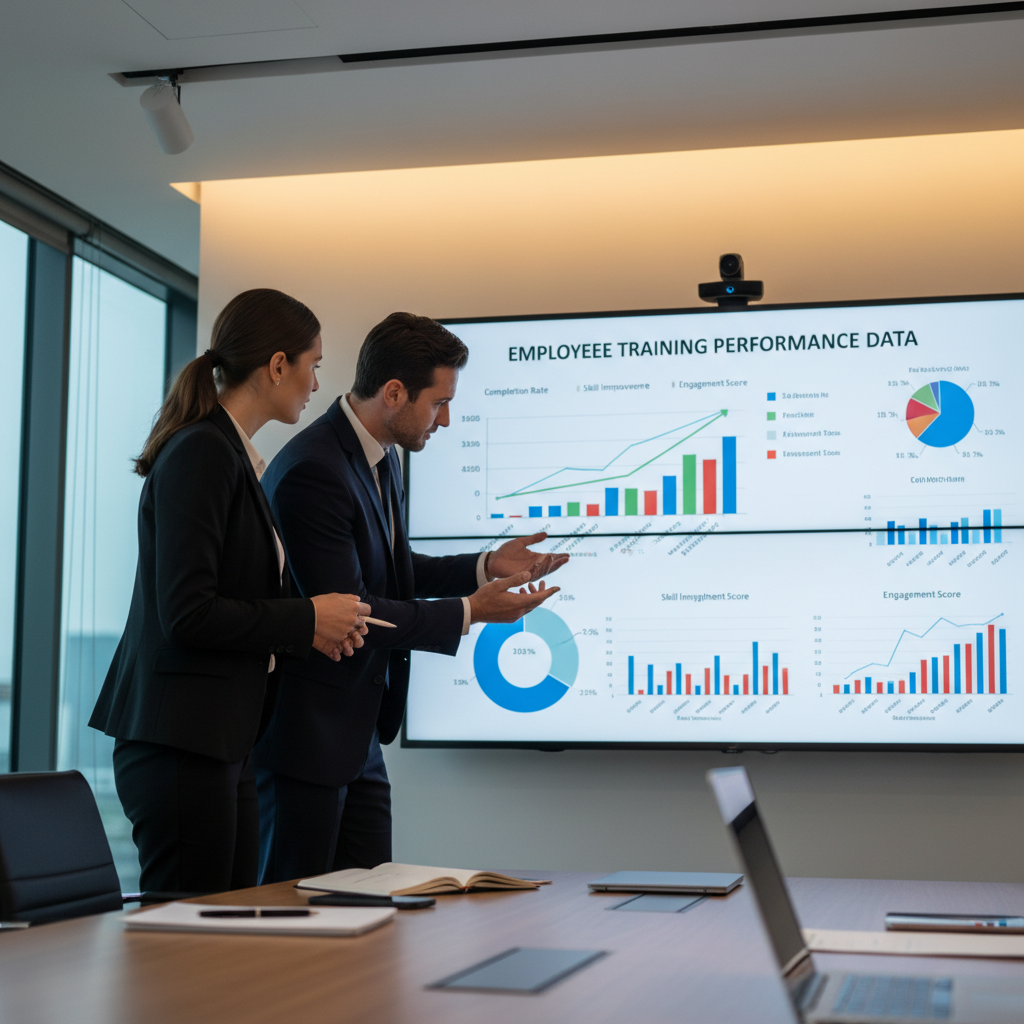
The mistake is treating the business case as something you assemble in a panic the week before the budget review. By then the data is whatever happened to be collected, and the story is reverse-engineered. The functions that win the funding argument build the case continuously — choosing the outcomes that matter up front, instrumenting for them, and reviewing capability-against-outcome on the same cadence as any other part of the business. When development reviews feed the same skills picture the analytics report from, the evidence accumulates on its own.
Done this way, the budget conversation stops being a defence and becomes a briefing. L&D walks in with a sized gap, a record of capability moving against it, and an outcome trending in the right direction — the same shape of case any other function brings when it asks for investment. That’s the real maturity marker for skills-based L&D in 2026: not a better platform or a richer content library, but the ability to stand in front of the people holding the budget and answer the only question that ever mattered — what are we getting back? — with a number, and a straight face.
01 June 2026
There’s a familiar reflex in most organisations the week before performance reviews open. Calendars fill with one-on-ones. Managers dig through six months of half-remembered work. Employees rewrite their own narratives. A neat document gets filed, ratings get calibrated, and then the system goes quiet for another half-year. In 2026, that rhythm finally looks like what it is: a beautifully formatted summary of feedback that never actually arrived in time to change anything.
The skills-based shift has made this gap impossible to ignore. If capability is supposed to be moving every week — through practice, application, and small course corrections — then the once-a-year review is an X-ray of a body that’s already healed or already broken. The teams making real progress on skills aren’t replacing the review with a better template. They’re replacing it with a continuous feedback rhythm that runs alongside the work, and treating the formal review as a periodic stocktake of a system that’s already doing its job.
The annual review wasn’t designed to develop capability — it was designed to rationalise pay, manage risk, and document performance for the record. It does those things reasonably well. What it has never done well is help someone get better at the work in front of them. By the time the feedback lands, the project is closed, the team has moved on, and the moment when the lesson could have changed behaviour has long passed.
In a skills-based model that gap compounds. The taxonomy is moving in week-long increments. Practice cycles are running across days, not quarters. The library is being refreshed against real capability signals. Bolting a six-monthly conversation onto a weekly system was always going to feel slow, and in 2026 it finally feels obsolete. The question isn’t whether to keep the review — most organisations still need a formal cadence for compensation and progression. The question is what runs in the long stretches between them.
Continuous feedback is one of those phrases that has been used to mean almost anything — from a Slack thumbs-up to a quarterly check-in re-labelled as “always-on”. The version that actually moves capability is narrower and more disciplined than that. It’s a short, specific signal — tied to a named skill, attached to a piece of real work, and delivered close enough to the moment for the person to act on it. It doesn’t need to be long, and it doesn’t need to be formal. It needs to be timely, concrete, and traceable.
The teams getting this right have stopped trying to invent a separate feedback ritual and started threading it into the work itself. A reviewer marks up a draft against the same rubric the course used. A manager spends three minutes after a client call naming what was strong and what to tighten next time. A peer leaves a structured comment on a deliverable using a shared framework. None of those moments looks like a “feedback meeting”, and that’s precisely why they work.
One of the quieter changes in 2026 is that feedback has stopped being framed primarily as a judgement and started being framed as a signal. The shift sounds semantic; it isn’t. A judgement is a closed loop — the person was good or wasn’t, the rating goes into the record, the conversation ends. A signal is an input — it tells the skills profile something specific, it nudges the next development action, and it accumulates into a much more honest picture of capability than any single review could produce.
That reframing changes what gets captured and how. Instead of one composite rating per person per cycle, the system captures many small signals against named skills: a manager’s rubric score on a deliverable, a peer’s qualitative note on a collaboration moment, the outcome of a deliberate practice cycle, an evaluator’s structured response inside evaluations and feedback. Each signal on its own is small. In aggregate they’re the most reliable read of capability the organisation has ever had.
The instinct, when feedback frequency goes up, is to assume managers need to do more. The honest answer is that they need to do less of one thing and more of another. Fewer end-of-cycle essays. More short-form, in-the-moment notes attached to real work. The managers who land this well aren’t suddenly trained coaches — they’re operating a much smaller loop, repeatedly: name what good looks like before the task, name what was strong and what to tighten after it, and let the system carry the rest.
Where the formal cadence still matters — in performance and development reviews and progression decisions — the manager’s job is no longer to manufacture feedback in the room. It’s to read the signals that have already accumulated, surface the patterns the day-to-day notes can’t, and decide what changes in the next development cycle. The review stops being where feedback happens and starts being where feedback is interpreted.
The reason continuous feedback finally pays back in a skills-based world is that the loop actually closes. A signal lands against a named skill. The skills profile shifts. The next piece of content, the next practice opportunity, the next stretch assignment is chosen against that updated picture rather than the stale one. Analytics and reporting stop telling leaders what was delivered and start telling them what’s moving — which skills are accelerating, which are stuck, which managers are running the loop and which are not.
There’s nothing flashy about any of this. No new platform category. No keynote-friendly rebrand of the performance review. It’s a quieter discipline: shorter feedback, more often, attached to specific skills, captured in a way the system can read. Done consistently, it does what every previous attempt to fix the annual review never quite managed — it turns feedback from a once-a-year ritual into the operating rhythm of how capability gets built. In 2026, that’s the half of the conversation worth investing in.
25 May 2026
There’s a moment in almost every skills-based L&D conversation when the room goes quiet. The taxonomy is in. The library has been re-tagged. The managers are having better development conversations than they were a year ago. The dashboards are starting to tell a real story. And then someone leans forward and asks the harder question: so when is any of this actually going to change what people can do? That’s the question 2026 is finally forcing L&D teams to answer head-on.
The honest answer is that most of the work we’ve done so far — the strategy, the platforms, the content rebuild — has been about getting the inputs right. But capability doesn’t come from inputs. It comes from what people actually do between courses, in real work, with feedback loops short enough to matter. The missing half of skills-based L&D isn’t another piece of the architecture. It’s the practice and application layer that turns exposure into ability. And almost everyone is still under-investing in it.
The instinct, for a long time, was to assume that good content plus a willing learner equals capability. Sit through a module on giving feedback, watch the scenarios, take the quiz, and the skill is yours. We now know that’s mostly not how skill formation works. Exposure to an idea is the first step in a longer process — not the process itself. Without retrieval, application, and correction, the content fades within days, and almost nothing about what the person can do at work actually changes.
In a skills-based model, that gap becomes uncomfortably visible. The taxonomy says we want someone at “intermediate” on a specific skill. The library says they’ve completed the intermediate content. The dashboard says “complete”. But the work they produce hasn’t moved. The honest reading is that we measured the wrong thing: we measured exposure when we needed to measure practice. The skills profile is only as real as the work behind it.
Practice, in an organisational sense, isn’t a separate event — it’s a structured use of the skill on real work, with someone close enough to the outcome to give honest feedback. That can be a scenario-based exercise inside the platform, but more often it’s smaller and messier than that: a junior writes a first-draft brief with the framework, a senior marks it up against the same criteria the course used, and the conversation that follows is where the skill actually starts to land.
The teams getting this right share a pattern. They name the practice opportunity at the same time they assign the content — “between now and our next one-on-one, you’re going to lead the first ten minutes of the team meeting using this technique” — rather than leaving it to chance. They tie it back to an explicit development goal, captured somewhere both the employee and the manager can see, so it doesn’t fall through the cracks. Tools like training goals and evaluations and feedback stop being admin features and start being the structure that holds practice in place.
One of the quieter shifts in 2026 is that L&D teams have stopped trying to build a parallel practice environment alongside the real one. The simulations and sandboxes still have a place — especially for high-stakes skills where mistakes are expensive — but for most capabilities, the best practice surface is the work itself. The next real customer email. The next forecasting cycle. The next difficult conversation. The job of L&D is to make that practice deliberate rather than accidental.
That “deliberate” piece is what changes the outcome. Random repetition reinforces whatever the person was already doing. Deliberate practice is narrower, harder, and structured around a specific gap. It targets the part of the skill the person is currently weakest at, runs through it under realistic conditions, and ends with feedback specific enough to act on. Done five times across two weeks, that loop moves capability further than a full day of content ever will.
The honest answer about managers and practice is that we keep asking them to do the wrong thing. We don’t need managers to become coaches in the formal, certified sense; most don’t have the time, and quite a lot don’t have the inclination. What we do need is something much smaller and much more consistent: a manager who is willing to spend five minutes at the start of a task naming what good looks like, and five minutes at the end of it pointing at what was strong and what to tighten next time. That’s the practice loop, and it doesn’t require a coaching qualification.
Where this gets formalised — in performance and development reviews and ongoing capability conversations — the manager’s job is to surface the patterns the day-to-day feedback doesn’t. Which skills are moving? Which ones aren’t? Where is the person ready to be stretched into the next level, and where do they still need protected practice time? Done well, the review stops being an annual artefact and starts being the place where the practice loop gets recalibrated.
The last piece, and the one that makes the whole thing pay back, is feeding practice signals back into the skills profile. Right now, most skills profiles are populated by content completions and self-assessments — both of which are weak proxies for real capability. The teams furthest ahead are starting to add signals from actual work: peer feedback on a deliverable, a manager’s rating against a known rubric, evidence of a skill applied to a stretch project, completion of a deliberate practice cycle. None of those signals is perfect on its own; together, they paint a much more honest picture than “course complete” ever did.
When those signals start to flow, the rest of the architecture finally clicks into place. The library knows which content actually moved capability and which only got watched. Internal mobility decisions are based on demonstrated practice, not on who happens to be visible. Analytics and reporting stop telling leaders how busy L&D has been and start telling them where the workforce is genuinely getting better. The skills-based programme stops being something the L&D team owns alone and starts behaving like a shared system of record for capability.
There’s nothing glamorous about the practice layer. It doesn’t come with a vendor demo or a category-defining keynote. It’s a quieter discipline — naming the practice opportunity, running the loop, capturing the signal, recalibrating — week after week. But it’s the half of skills-based L&D where the strategy stops being a slide and starts being something you can see in the work. In 2026, that’s the half worth investing in.
18 May 2026
Every skills-based L&D conversation eventually arrives at the same uncomfortable moment. The taxonomy is in. The managers are on board. The dashboards are saying something useful. And then someone in the room asks the simplest question of all: OK — so when an employee needs to actually learn one of these skills, what do we point them at? Nine times out of ten, the answer is a course catalogue built three to five years ago, organised by topic rather than skill, and last reviewed when half the current workforce wasn’t even hired.
That mismatch is the quiet bottleneck behind a lot of skills strategies right now. The strategy layer has moved on; the content layer is still 2018. Until that gap closes, every other investment — taxonomy, analytics, manager enablement, internal mobility — runs into the same wall: the learning the data points to isn’t actually there in a usable form. The next move in skills-based L&D, for most organisations, isn’t another platform decision. It’s a content decision.
Most L&D libraries were built around a clean assumption: people need to learn topics. “Time management.” “Effective communication.” “Excel for beginners.” Each course was a self-contained module, between thirty minutes and two hours, dropped onto a tile-based homepage and recommended by job role. It made sense when L&D was measured by completion rates and people genuinely did sit down once a quarter to take a course end-to-end.
A skills-based world breaks that model in three places at once. First, the unit of value is no longer the course — it’s the skill, at a specific level, in a specific context. Second, learners don’t arrive with two free hours; they arrive with seven minutes between meetings and a problem they need to solve. Third, the data that should be flowing back into the skills profile — what the person actually engaged with, what they tried in their work, where they got stuck — is invisible to a system that only knows whether someone clicked “mark as complete”. The catalogue isn’t wrong; it’s just answering an older question.

The first shift is conceptual, and it’s the one most catalogues quietly fail. In a skills-based library, the unit of organisation isn’t a course — it’s a skill, tagged at a level. A single ninety-minute course on “Effective Feedback” becomes, in the new model, a small constellation: a five-minute explainer on the foundational skill, a scenario-based practice at the intermediate level, a manager-only debrief at the advanced level, plus the short reference content people actually open before a difficult conversation. Same content, fundamentally re-shaped.
That re-shaping is what unlocks everything downstream. When content is tagged to a skill and a level, the system can finally answer the question learners are actually asking — “I need to get from intermediate to advanced on this specific skill, in the next six weeks; what should I be doing?” The course catalogue couldn’t answer that. A skills library can. And the same tagging is what lets analytics start showing capability movement instead of completion volume.
The second shift is structural. Content for a skills-based world isn’t just re-labelled — it’s re-formed. The long, linear course is being unbundled into shorter, modular pieces designed to drop into the flow of work, alongside richer formats like scenario practice, peer-shared playbooks, short videos from internal experts, and step-by-step references that live next to the task they support. The point isn’t that long-form learning is dead; it’s that it can no longer carry the whole load on its own.
For L&D teams, this is where the work changes character. Rather than commissioning one new course a quarter and watching its completion rate drift downward over twelve months, the team is curating a much wider mix — some authored in-house, some pulled from an existing library, some captured live from how the best people in the business already work. KnowHow’s AI-powered course creation tools and course management capabilities sit naturally here — they make it realistic to author, tag, and maintain that kind of granular content without a content team five times the size.
The third shift is the least glamorous and probably the most important. Every piece of content has to be tagged to the skills taxonomy — the same taxonomy the rest of the skills programme is built on. If a video, a course, a job aid, or a scenario practice can’t be traced back to specific skills at specific levels, it can’t be recommended intelligently, can’t be measured against capability movement, and can’t be connected to the development goals managers and employees are agreeing on.
This is the moment a lot of L&D teams hit a wall — not because the work is intellectually hard, but because retro-fitting tags onto a legacy library is a slog. The way through is to stop treating it as a one-off cleanup project and start treating it as the standard way new content gets in. From now on, nothing enters the library without a skill, a level, a context, and an owner. Over a few quarters, the catalogue turns into a library — and the library starts to behave like an asset rather than an archive. Linking those development goals back to the work is exactly where features like training goals and insightful analytics & reporting become useful, because the tags finally have somewhere to land.

It’s tempting to assume that AI quietly solves the content problem — that a clever model will generate whatever a learner needs in the moment and the library question goes away. Generative tooling really has changed what’s possible. It can draft outlines, summarise long content into short reference cards, translate, role-play, and personalise tone. What it can’t do is invent the organisation’s point of view on how work actually gets done here. That has to come from inside the business, captured deliberately, and curated as content.
In practice, AI raises the bar on the library rather than removing the need for one. The better the source material — well-tagged, current, written in the organisation’s own voice — the better the AI’s recommendations, summaries, and adaptive paths get. The L&D teams getting genuine value from AI aren’t the ones with the flashiest model; they’re the ones whose underlying content is in good enough shape for a model to work with.
Most of the leaders we speak to don’t describe the content shift as a project — they describe it as a slow, deliberate rebuild that runs underneath the bigger strategy. New content is born skill-tagged. Legacy content gets re-tagged when it’s touched, and quietly retired when it isn’t. Formats diversify; the catalogue stops being a wall of tiles and starts being a layered library that recommends differently depending on the skill, the level, and the person.
When that rebuild lands, the rest of the skills programme stops dragging. Managers can recommend specific things, not generic courses. Career and mobility conversations point at content that exists and fits. Analytics finally measures capability movement and not just clicks. The content layer becomes what it was always meant to be — not the archive at the end of L&D, but the working surface where strategy and people actually meet.
11 May 2026
After all the conversations about skills frameworks, manager engagement and capability analytics, every L&D leader I speak to eventually arrives at the same place: OK — we have the data. Now what do people actually do with it? In 2026, the answer that’s starting to separate strategic L&D from operational L&D is internal mobility. Once skills data is alive and trustworthy, it stops being a reporting layer and starts being the engine that helps people move — into projects, into new roles, into careers that don’t require leaving the company.
That shift is bigger than it looks. For two decades, learning and career conversations sat in different parts of the building. L&D ran courses. HR managed succession spreadsheets. Managers held annual career chats that mostly produced polite vagueness. In 2026, the organisations getting skills-based L&D right are the ones using their skills data to make those conversations sharper, faster, and finally, useful — both to the employee and to the business.
The career conversation has always been awkward. Employees often arrive without language for what they want; managers often arrive without information about what’s possible; HR closes the meeting with “let’s revisit this in six months.” That dynamic survives because both sides are missing the same thing — a shared, current view of what the person can actually do today and where those capabilities point next.
When skills are a living object inside the organisation, that whole conversation changes shape. Employees see their own skills profile and the level they sit at. Managers see how those skills map to other roles, projects, and stretch assignments. The conversation moves from “where do you see yourself in three years?” to something concrete — “these four skills are 70% of the way to this role; here are the two we’d close together this quarter.” That clarity is most of the magic.
In a traditional organisation, the org chart is the model of who can do what. It works at one level — reporting lines, headcount, layers — but it tells you almost nothing about capability. Two people in the same job title routinely have very different skill profiles, and the people best suited to a new opportunity are often nowhere near it on the chart.
Skills data flips that picture. Instead of “this is the role you sit in,” the system answers a more useful question: across the whole workforce, who has the skills (and the level of skills) this opportunity needs? That single shift unlocks a different operating model. Project leads can find internal talent without going through three layers of HR. People with non-obvious skill combinations get visible. Roles that would have defaulted to external hires get an honest internal-versus-external comparison for the first time. The org chart still exists, but it stops being the only map of the workforce.
Most internal mobility programmes don’t fail for lack of ambition. They fail because the underlying skills picture isn’t there. HR launches a talent marketplace, an internal opportunity portal, or a career-pathing tool — and within twelve months it’s a thin layer of role descriptions that don’t connect to anyone’s actual capabilities. Employees can’t see why they’d be a fit for the open project; managers can’t see who across the business might be. The marketplace becomes a job board with a friendlier brand.
The pattern is the same one we covered with capability measurement: without a stable, shared definition of skills, every downstream system is doing its own private translation work, and the answers don’t line up. With a taxonomy in place and skills signals flowing in from learning, performance conversations, and applied work, an internal mobility programme finally has something to stand on. The fit calculation gets honest. People start moving. The business retains capability it would otherwise have hired in or lost out the door.

“Career path” used to imply a ladder — junior, mid, senior, lead, manager, director. Some industries still need that scaffolding, but it isn’t where most careers actually move in 2026. Lateral moves, project work, stretch roles, hybrid roles that combine two adjacent disciplines — these are how capability compounds inside an organisation, and a rigid ladder can’t represent any of them.
In a skills-based system, a career path is something more useful: a shape in the skills graph. It’s the set of capabilities that distinguish where someone is from where they want to go, and the learning, projects, and feedback that will move them between the two. Some paths run up a familiar ladder; others move sideways into a new function; others fan out into a more senior, more cross-functional shape that doesn’t have a clean title. The skills data lets the organisation honour all of those, without forcing every conversation into a template that doesn’t fit. This is also where tools like KnowHow’s Career Aspirations and Skill-Will Matrix and Performance & Development Reviews earn their keep — they make the path visible, agreed, and trackable across both sides of the conversation.
The strategic reason CEOs and CHROs are spending real attention on this in 2026 is that the workforce numbers won’t bend on their own. Roles change faster than hiring pipelines can keep up. Skills shortages in critical areas don’t get solved by a single recruiter. The only sustainable answer is to grow people from the inside — and that requires knowing, with precision, what the inside actually has.
That’s the quiet promise of skills-based L&D when it crosses over into internal mobility. The same data that shows whether capability is moving across the business also shows which careers are available, which growth bets are realistic, and which gaps the organisation should be growing into rather than buying in. The L&D function that owns that data isn’t a training department anymore. It’s a critical layer of how the business builds itself for the next three years.
06 May 2026
After the strategy slides, the taxonomy work, the manager training, and the learning-in-the-flow-of-work pilots, every L&D leader eventually runs into the same uncomfortable question — and it almost always comes from a CFO or a CEO. OK. Is any of this actually working? In 2026, the organisations getting skills-based L&D right are the ones that have stopped trying to answer that question with the old metrics and have rebuilt the way they measure capability from the ground up.
Because here’s the catch: skills-based L&D and traditional L&D measurement aren’t just misaligned — they’re built on completely different assumptions about what success looks like. You can’t run a skills-based strategy and report on it with course-completion dashboards, any more than you can run a modern engineering team using lines-of-code as a productivity metric. The numbers will look fine. The story they tell will be wrong.
Traditional L&D reporting was designed for a world where the deliverable was the course. Completion rates, hours of training delivered, post-course NPS, mandatory compliance percentages — these are operational metrics. They tell you whether the L&D function is functioning. They don’t tell you whether anyone in the business is more capable than they were six months ago.
That gap stayed invisible for a long time because nobody was asking. As long as the dashboards turned green and the audits passed, the question of “are people actually getting better at their jobs?” sat in the too-hard pile. In 2026, with skills-based strategies in active rollout and finance teams asking pointed questions about return on capability investment, the gap is no longer ignorable. The metrics that made L&D defensible in the past are now actively misleading the people trying to steer it.

Measuring capability instead of activity means tracking three different kinds of signal, all anchored to the same skills taxonomy:
No single one of these tells you the whole story on its own. A passed assessment isn’t capability. A manager’s view that someone is “doing better” isn’t capability either. What matters is whether the three signals start to line up over time. When proficiency rises, the right behaviours show up in the work, and the related business outcomes improve for the same cohort, you have something close to genuine evidence that capability is moving.
Most organisations discover the limits of their reporting stack about three months into a serious skills-based effort. The LMS knows about courses and completions. The performance system knows about ratings and goals. The HRIS knows about roles and titles. None of them know about skills as a shared object — which means none of them can answer “how is capability X moving across the organisation?” without a quarterly heroic effort by someone in HR analytics with a spreadsheet and a long evening.
This is exactly why the taxonomy work matters as a foundation. Without a single, agreed list of skills with stable IDs, the analytics layer has nothing to attach to. With it, every learning event, every manager check-in, every assessment result, and every internal move can be tagged to the same underlying capabilities — and a real picture starts to emerge. The analytics question and the taxonomy question are, in practice, the same question approached from opposite directions.

The systems carrying skills-based L&D in 2026 don’t treat analytics as a reporting afterthought. They treat it as part of the operating model. Every time a learner finishes a piece of content, completes a goal, demonstrates a skill in a project, or receives feedback from a manager, the system writes a signal back against a specific skill at a specific level. Over weeks and months, those signals form a living picture of capability — at the individual, team, and organisation level — that doesn’t need a quarterly stitch-together to make sense.
This is where KnowHow’s Training Goals and skills analytics earn their keep. Because every goal is tied to a defined skill at a defined level, and every learning interaction feeds the same model, the data is consistent by design rather than reconciled after the fact. Managers see exactly which skills their team is building, where gaps are widening, and which interventions are actually shifting the dial. L&D leaders see capability movement across the business, not just course traffic. And executives finally get a view of the workforce’s skills that means the same thing in May as it did in March.
There’s an old line that you become what you measure. For two decades, L&D has been measuring courses delivered and tickets closed — and it has, broadly, become a function that delivers courses and closes tickets. The shift to skills-based L&D is, at its core, a decision to start measuring capability instead. That choice quietly forces every other part of the system — content, manager conversations, learning experiences, taxonomy, technology — to reorganise around the thing that actually matters. In 2026, the L&D functions winning the budget conversation are the ones that have stopped reporting on activity and started reporting on capability.
28 April 2026
Most skills-based L&D strategies stall in the same place. Not at the platform. Not at the content. Not even at manager engagement. They stall the moment a leader asks a deceptively simple question: which skills, exactly, are we developing? And the answer comes back from three different parts of the business in three different vocabularies. In 2026, the organisations making real progress on capability are the ones quietly fixing this first — by investing in a clear, shared skills taxonomy before they invest in anything else.
A skills taxonomy isn’t glamorous. It doesn’t show up in keynote slides or vendor demos. But every meaningful capability decision an organisation makes — what to develop, who to promote, where to hire, which roles to redesign — depends on a shared language for what “skill” actually means. When that language is missing, even the best learning content lands inconsistently, manager conversations fragment, and analytics produce numbers that nobody quite trusts.
Walk into most mid-sized organisations and you’ll find half a dozen lists of skills, all real, all in active use, and almost none of them in agreement. Recruitment uses one taxonomy in job ads. The performance review system uses another in its rating scales. L&D has its own list inside the LMS. A succession-planning spreadsheet somewhere uses a fourth. Each list was built for a sensible reason; none of them speak to each other.
The cost of this fragmentation only becomes visible when an organisation tries to do anything strategic with skills. Workforce planning becomes guesswork. Internal mobility stalls because no one can match a person’s capabilities to a different role with confidence. Reskilling investments are made without a baseline to measure them against. And every dashboard that claims to show “skill levels” is quietly stitching together data that was never designed to be compared.
The skills taxonomies that work in 2026 don’t look like the bloated competency frameworks of a decade ago. Those tended to be exhaustive, theoretical, and impossible to maintain. Modern taxonomies are smaller, more pragmatic, and built to be lived in:
Done well, this kind of taxonomy quietly becomes the operating layer underneath everything else: career pathways, learning recommendations, skills gap analysis, manager development conversations. It’s the piece that lets a “skills-based” strategy actually behave like a system rather than a slogan.
Historically, building a skills taxonomy was a heavyweight project. A consultancy would interview stakeholders for months, produce a 400-page framework, and hand it over to an HR team that had neither the bandwidth nor the tooling to keep it current. Within eighteen months it was out of date; within three years it was quietly abandoned.
What’s changing in 2026 is the toolset. AI-assisted skills extraction can read job descriptions, learning content, and performance data and propose a coherent skills model in days, not months. That doesn’t remove the need for human judgement — taxonomies still need to be validated by the people who actually do the work — but it dramatically lowers the cost of getting started, and even more importantly, the cost of keeping the taxonomy alive as roles evolve. The result is that organisations no longer have to choose between an unmaintainable monster of a framework and having no shared skills language at all.
A skills taxonomy that lives in a document is a research project. A taxonomy that lives inside the platforms people actually use every day is infrastructure. This is where the choice of LMS matters more than it used to. The systems carrying skills-based L&D in 2026 aren’t course-delivery engines with a skills bolt-on; they’re built around skills as a first-class concept — connecting content, training goals, manager conversations, and analytics to the same underlying skills model.
KnowHow’s Training Goals and skills analytics are designed exactly around this principle. When every learning goal, every development conversation, and every progress signal is anchored in the same shared skills definitions, the picture finally lines up. Managers see what their team is actually growing into. L&D sees where capability is moving across the business. And leaders get a view of organisational skills that means the same thing on Tuesday as it did on Monday.
It’s tempting to treat a skills taxonomy as a back-office detail — something to clean up after the strategy is set. The organisations getting skills-based L&D right are doing the opposite. They’re investing in the shared language first, because they’ve recognised that without it, every downstream initiative — from learning in the flow of work to manager-led development to performance-linked outcomes — is built on sand. In 2026, the unglamorous work of agreeing what a skill is, and naming it the same way everywhere, is quietly becoming the most strategic thing an L&D function can do. Explore how KnowHow helps organisations build a skills taxonomy that actually lives inside their learning ecosystem.
21 April 2026
There’s a quiet truth that most L&D teams know but rarely say out loud: the single biggest factor in whether a skills-based learning programme succeeds isn’t the content, the platform, or even the analytics. It’s whether the employee’s line manager is genuinely engaged. In 2026, as organisations race to rebuild their training strategies around capability rather than compliance, managers are emerging as the decisive — and chronically under-leveraged — lever.
For years, L&D has been positioned as a central function that designs and delivers development to the workforce. That model worked when learning was episodic. It struggles badly when development needs to be continuous, role-specific, and tied to real performance outcomes. The organisations pulling ahead aren’t those with the richest content libraries — they’re the ones treating every manager as an active partner in skills development.
Research across L&D functions consistently points to the same finding: engaged managers are the single biggest predictor of whether learning translates into performance. An employee whose manager supports, discusses, and reinforces development is several times more likely to apply new skills on the job than one whose manager treats training as an HR activity happening somewhere in the background.
The mechanism isn’t mysterious. Managers control the context in which learning is applied. They set the priorities that determine whether there’s time and permission to practise new skills. They give the feedback that tells an employee whether they’re actually getting better. And they decide which opportunities people are stretched into — which, more than any course, is where genuine skill development happens.
Despite all of this, most L&D programmes are still built with a gap at the centre: the manager. Learning is assigned by HR systems, completed by employees, reported in dashboards — and the manager is, at best, copied on a completion notification. They know their team member finished the course. They rarely have a clear picture of what skills the person was meant to develop, how they were developing them, or whether the investment is translating into anything the team actually needs.
This isn’t a failure of intent. It’s a failure of design. Most legacy LMS platforms were built to deliver content to individuals and report on completion — not to support ongoing capability conversations between managers and their teams. As a result, the manager-employee relationship, which is where skills development actually lives, has been systematically under-served.

In a skills-based model, the manager’s role shifts from passive observer to active co-architect of development. That shift is grounded in a few core practices:
KnowHow’s Training Goals were designed with exactly this model in mind. Rather than pushing learning at employees and hoping it sticks, Training Goals begin with a structured conversation between manager and employee, anchored in the real requirements of the role. The goals themselves become the focal point — the shared reference that gives both sides clarity, and gives L&D visibility into what’s actually being developed across the organisation.
One of the most common mistakes in skills-based L&D rollouts is assuming managers will naturally step into this expanded role. They won’t — not without support. Most managers were promoted on the strength of their technical performance, not their coaching ability. Asking them to lead meaningful development conversations without giving them the tools, frameworks, and confidence to do so sets the whole initiative up for uneven execution at best.
This is where the L&D function’s role evolves. Instead of being the sole provider of development, L&D becomes an enabler of a manager-led model: equipping managers with conversation frameworks, surfacing the right data at the right time, and designing platforms that make the manager’s job easier rather than adding to it. The best L&D teams of 2026 aren’t measured on how many courses they’ve delivered — they’re measured on how effectively they’ve activated the thousands of development conversations happening every week across the business.

Skills-based programmes where managers are genuinely engaged share a recognisable signature in the data. Skill progression is faster. Development activity is more consistent across teams. Employees report higher clarity about what they’re trying to grow into — and higher confidence that their development actually matters to the business. Those signals are measurable, and they tell a very different story than a completion rate ever could.
The real shift underway in 2026 isn’t just about moving from completion metrics to skills metrics. It’s about where development actually happens — and who drives it. In the organisations pulling ahead, the answer is increasingly clear: development lives in the relationship between manager and employee, and L&D’s job is to make that relationship as productive as possible. Explore how KnowHow helps organisations build a manager-led skills development model.